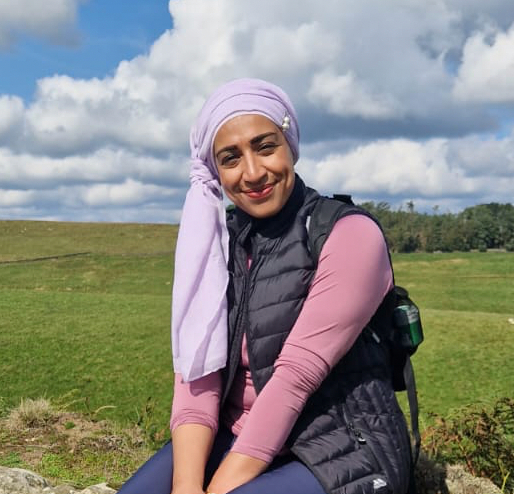
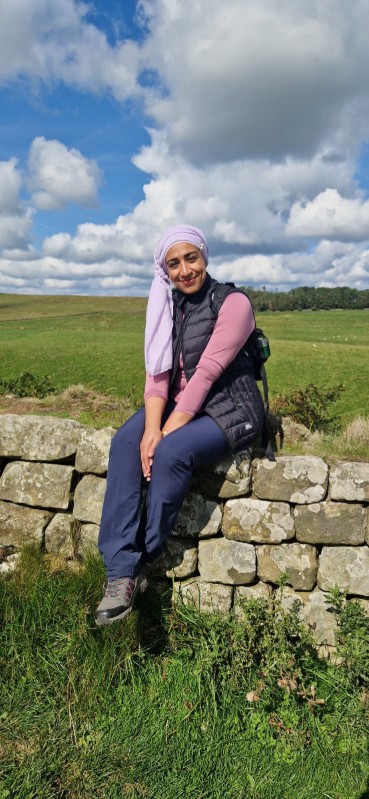
I have been volunteering with Sheffield Environmental Movement (SEM) for almost five years, and it has been a truly enriching journey. SEM has given me the opportunity to reconnect with nature and the great outdoors — something I had missed without even realising it.
Spending time in nature, breathing in fresh air, and appreciating open spaces has been not only beneficial for my physical health, but also a huge boost for my mental wellbeing. It brings a sense of calm, clarity, and positivity that’s hard to find elsewhere.
One of the most joyful parts of my experience has been meeting people from all walks of life — each with their own stories, needs, and perspectives. Working with such a diverse range of individuals has helped me become more understanding and compassionate. It’s amazing how much we can learn from simply listening to others.
Volunteering with SEM has also reconnected me with my childhood — a time when adventures didn’t require screens, gadgets, or the internet. Just the excitement of being outside, exploring, and feeling free. SEM has helped me rediscover that sense of wonder.
I’ve had the privilege of supporting many groups during residential weekends and outdoor activities. Whether it’s assisting with personal needs or simply making sure no one feels left out, I’ve found purpose and joy in being there for others. It’s about making everyone feel safe, included, and valued.
Why do I volunteer for SEM? Because it gives me a chance to grow, to be part of something meaningful, and to be surrounded by nature and good company. It allows me to share stories, listen deeply, and clear my mind through walking and reflection. Every experience has been heartfelt, and every moment has reminded me of the importance of community, compassion, and connection.
Clive Lewis MP Chair of Chair of the All Party Parliamentary Group on Race and Community.
Clive Lewis MP noted that, the report was commissioned in response to the lack of acknowledgement and systematic undervaluing of the experiences of people of colour across the globe who are bearing the brunt of the climate and nature emergency.
An inquiry established in 2023 heard powerful testimony from almost 40 environmental activists of colour from across the Global South and Global North who highlighted the disproportionate impact the climate and nature emergency is having on people of colour and indigenous communities around the globe. Crucially, they described the unjust nature of this crisis which has its roots in histories of European colonialism and extractivism.
The Inquiry made a series of recommendations to the UK government on how to create climate and nature policy that better serves the global majority. These include:
Establishing a new mandatory due diligence law, to ensure that British companies take proactive steps to prevent human rights abuses within their operations
Banning all plastic waste exports by 2030
Introducing demand side supply chain and financial legislation, which would ensure that large companies and financial institutions are responsible for any human and environmental rights abuses which might occur in their supply chains
The UK government must commit to supporting the Clean Air (Human Rights) Bill as it passes through the Houses of Commons
Local and National Public bodies and government agencies must work towards increasing knowledge of air pollution as a cause of ill health
The government must commit to making data on air pollution more accessible and widely available
The UK government and local authorities must prioritise improving access to green space and creating greener communities, especially in areas of deprivation or where there is poor or unequal access.
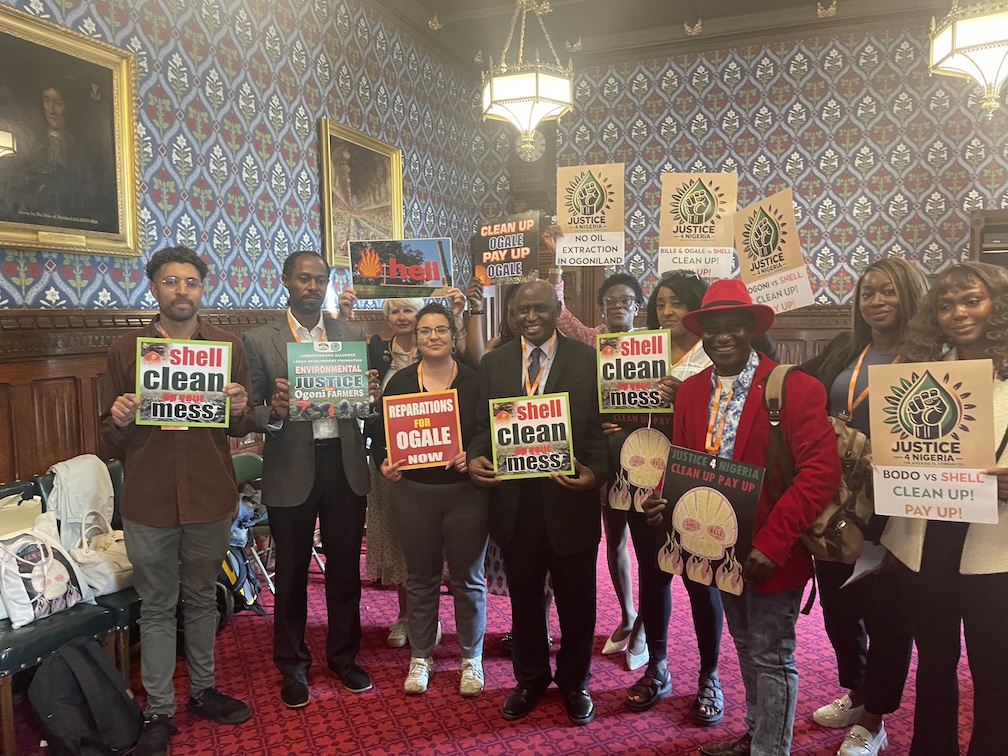
Activists gave testimonies and case studies about the links of air pollution to maternal ill health on minorities in the UK. A spokes person from Ogun State in Nigeria spoke of the ongoing Shell Oil Company’s destruction of ecosystems and its failure to clean up, and how that is having very serious impact on people’s health in addition to the destruction of their farm lands and fisheries which are the main sources of mlivelihood, resulting in serious famine.
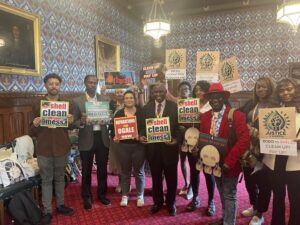
SEMs CEO and some of the Climate Justice Activists at the House of Commons.
SEM’s CEO noted that, minorities and marginalised groups in the UK are uninterested in a climate debate that individualises responsibilities instead of tackling the socio-political structures that instead appear to frame the climate crisis around initiatives such as Carbon literacy projects that target them. He argues that projects such as these are of no relevance to the lived experience of people facing climate anxiety. That is because framing the climate crisis in a way that is unrelatable to those outside the ethically white bubble perpetuates the underrepresentation of minorities in ongoing attempts to address the climate catastrophe. Maxwell emphasised that, framing a climate crisis that did not confront overlapping oppression responsible for its unequal consequences such as racial capitalism makes the climate discussion a non-liberatory space for people from the Global South who are the victims of economic inequality, air pollution, toxic waste colonialism due to histories of colonial legacies.”
SEM’s CEO had the opportunity to be invited to attend the 3rd Future Countryside Conference 2025, hosted by Lord William Burlington, Chair, Devonshire Group and Chatworth House Trust, attended by over 200 delegates from the environment, heritage, farming, business, Defra officials and young people.
In his welcome address, Lord Burlington said, the event sought to celebrate the countryside as a vibrant, inclusive landscape that benefits everyone, with a focus on positive impact and possibilities for rural economies and communities. He explained that, Chatsworth House is a great convener of people and indeed has been fulfilling that role for centuries and it was therefore of a tremendous honour to be hosting the event. Lord Burlington emphasised that Chatsworth Estates has worked hard to preserve and enhance the natural and cultural assets under their care for future generations and at the same time making significant contributions to the economic, environmental and social wellbeing of local communities of interest.
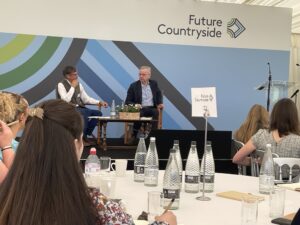
Julian Glover (left) interviewing Michael Gove, Former Minister in the Conservative Government who commissioned the “Glover Review of Designated Landscapes”(2019).
He explained that, there was need for greater understanding of what sustainable, resilient countryside looks like, and how vital it is for the nation’s future and that the Chatworth Estates will work to foster greater support, which in turn will help rural communities, cultures and landscapes across Britain, and beyond, to survive and thrive in the long term. Lord Burlington disclosed how across their commercial and agricultural estate and Chatsworth House Trust charity is spearheading a cultural programme, learning and outreach as they strive to build their outreach; relevance to neighbours, visitors and partners, their resilience in times of climate emergency and global uncertainty and their positive impact within the community and the wider world.
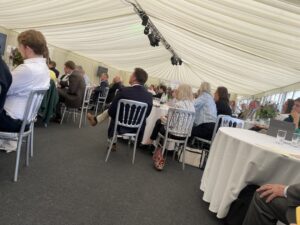
Delegates at the Future Countryside Conference.
Founders of Future Countryside, Julian Glover and Nick Herbert said the vision is to create ‘A countryside for All’, as the countryside is part of our national heritage and what happens to it should matter to us all. It should be central to a modern vision of healthier, greener and more prosperous country. The countryside should not therefore be marginal to debate but rather build on a broader understanding of its core place in our collective future.
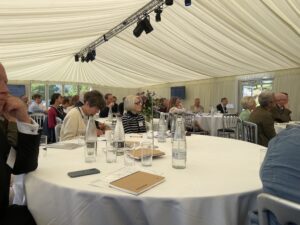
Delegates at the Future Countryside Conference.
There were provocations on land use and the challenges facing the countryside especially access to the countryside. SEM’s CEO in his contribution said countryside access was not just about benevolence, and organising access for people from Black and ethnic minority communities to visit the countryside, but rather it is more about governance and representation. He explained that the countryside should be about our shared heritage as there has been the Black contribution made to the English countryside in terms of enslaved people, Black soldiers in the World Wars, this history should be told and cherished. Maxwell emphasised that the historical erasure of the Black presence in the English countryside is the reason behind access issues as Black people and other minorities are made to feel unwelcome in that space with rural communities failing to acknowledge the significant and important contributions made by Black and ethnic minorities to the English countryside. He was therefore of the view that so much academic research evidence supports the fact that access to the countryside is not about the absence of logistics and other resources as some speakers here at the conference would want us to believe, but deeper than that, and therefore in order to fashion out a better future of ‘A countryside for All’ would involve moving away from this old narrative.
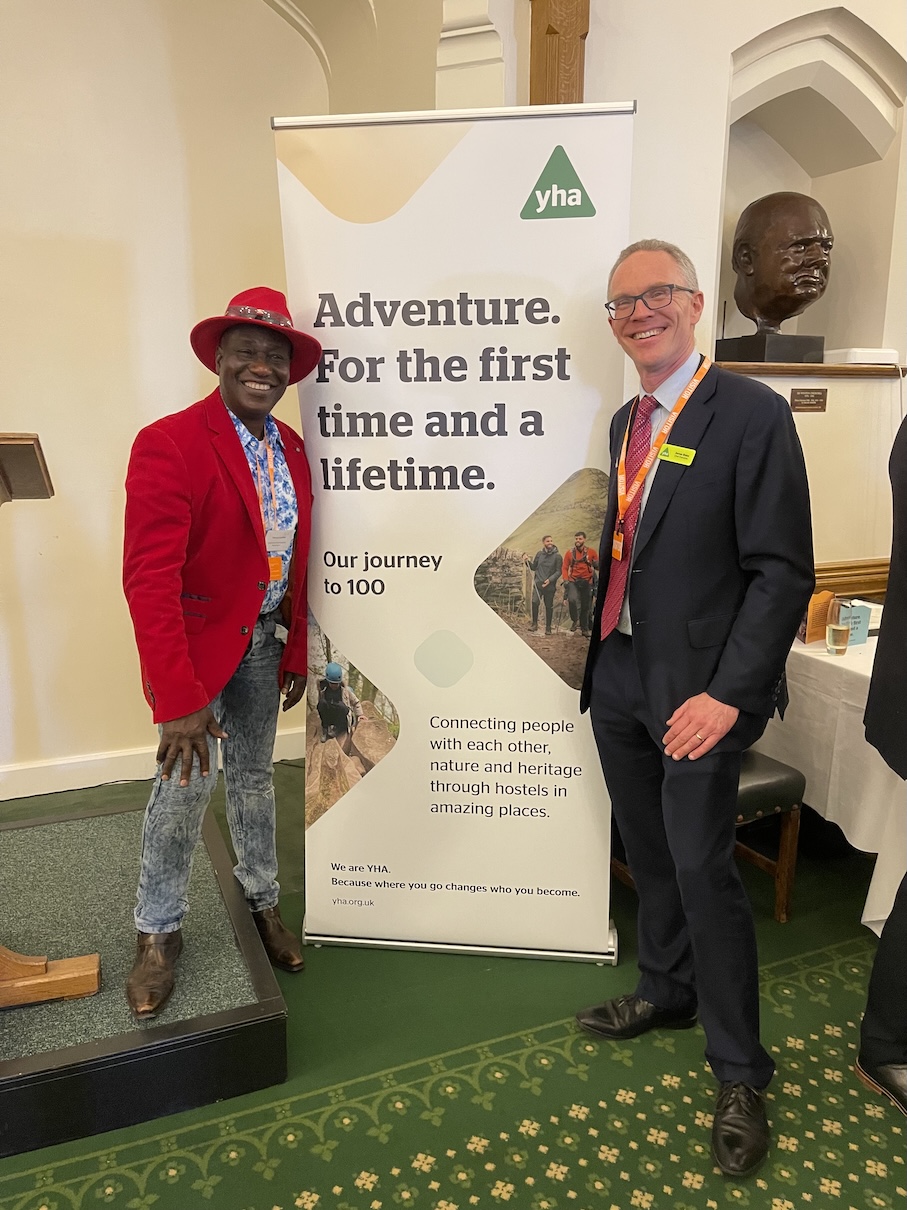
SEM’s CEO was invited to the launch of the YHA’s (Youth Hostel Association) refreshed strategy at the Houses of Parliament. The 10-year strategy has a shared mission to connect people with each other, the outdoors, nature and heritage through hostels in amazing places.
Back in 2020, the YHA published its 10-year strategy titled, Adventure. For the first time and a lifetime. This served it well, guiding efforts to improve access to travel and adventure for all, especially young people.
SEM’s CEO, Maxwell Ayamba BEM with James Blake CEO YHA
James Blake, CEO of the YHA acknowledged that as a result of the changed financial picture and challenges facing society and the YHA’s beneficiaries today, the YHA is refreshing its strategy to bring a laser-like focus to activities and to deepen impact.
He noted that with this refreshed strategy, the YHA strides out on the road to its centenary in 2030 with it’s sights set on long-term sustainability and the determination to deliver on a purpose for beneficiaries and wider society. Adding, “we are ambitious to make a big difference but cannot do it alone and therefore look forward to working with partners to bring this refreshed strategy to fruition and to connect people to each other, the outdoors, nature and heritage.”
Defra Minister Baroness Hayan
There were also speeches from Margaret Hart, Chair of the YHA and Defra Minister Baroness Hayan, who said the Labour Government is committed to making nature accessible to all.
We use cookies to optimize our website and our service.
Functional
Always active
The technical storage or access is strictly necessary for the legitimate purpose of enabling the use of a specific service explicitly requested by the subscriber or user, or for the sole purpose of carrying out the transmission of a communication over an electronic communications network.
Preferences
The technical storage or access is necessary for the legitimate purpose of storing preferences that are not requested by the subscriber or user.
Statistics
The technical storage or access that is used exclusively for statistical purposes.The technical storage or access that is used exclusively for anonymous statistical purposes. Without a subpoena, voluntary compliance on the part of your Internet Service Provider, or additional records from a third party, information stored or retrieved for this purpose alone cannot usually be used to identify you.
Marketing
The technical storage or access is required to create user profiles to send advertising, or to track the user on a website or across several websites for similar marketing purposes.