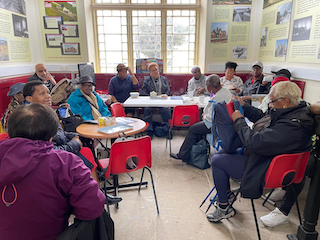
SEM’s CEO, Maxwell A. Ayamba BEM said, he was very delighted to join enthusiastic anti-racism campaigners and activists from the Global Majority at the 2025 RACE Summit, Kings College, London on July 3rd 2025. As part of this year’s RACE Summit, there was a career journey exhibition, showcasing career journeys of people such as himself in the environment and conservation sectors.
He said aim of the RACE Summit is to support people from the Global Majority who want to get into the environment/conservation sectors, and for others to see for themselves the journey others have taken, and the challenges they had to overcome to make an impact in the sector. I found the Summit very inspiring to see the passion and drive on the need for diversification of the sectors especially in this time of climate anxiety and nature depletion. The Summit demonstrated how there is an increasing awakening and agency to make the environment/conservation sectors inclusive and diverse for the common good of us all as one human race, because biodiversity is synonymous to human-diversity.
Activists such as Lauren Rosegreen and Beatrice Anomah organisers of the 2025 RACE Summit should be applauded for their tirelessness to advocate for change in a sector that has been historically constructed and historised as a “white space”. Both our human and natural world stand to benefit from a collective vision to make the environmental space an inclusive thriving space for the good of humanity and planet.
The RACE Report, published annually, supports transparency on the racial diversity of environment organisations and funders in the UK. It aims to encourage action in the sector to address barriers and improve diversity, equity and inclusion of the workforce and governing bodies.
Lauren Rosegreen of the RACE Report (left) and Maxwell A. Ayamba BEM, SEM CEO
This is a reflection from Tahir Mahmood who recently attended a Hill & Moorland Leadership Training course in the Peak Disctrict National Park.
“I’m writing to express my sincerest thanks for providing me with the opportunity to attend the Hill and Moorland Leadership training last week. It was an incredibly insightful and practical course, and I’m truly grateful for your support in making it happen.
The training was exceptionally beneficial in so many ways. I gained a much deeper understanding of effective group management in challenging environments, advanced navigation techniques, and crucial decision-making processes under pressure. The practical scenarios and expert guidance from the instructors were invaluable, significantly boosting my confidence in leading groups safely and responsibly. I learned so much, from refining my map reading skills to understanding the intricacies of route planning for diverse weather conditions. I’m excited to implement these enhanced skills directly into our future outdoor activities, ensuring every participant has a safe, enjoyable, and educational experience.
Crucially, the course also brought into sharp focus the absolute necessity of having the correct equipment – not just for effective group leadership, but also for ensuring my own safety in unpredictable conditions. While I have some basic gear, the training highlighted gaps in my current clothing and equipment that are essential for safely leading groups and for my personal protection, especially when dealing with unforeseen circumstances or prolonged exposure to adverse weather.
Given the critical importance of being properly equipped to uphold the highest safety standards for both myself and the groups I’ll be leading, I wanted to inquire if there might be any avenues for financial assistance or funding available to help me purchase the necessary clothing and equipment. Investing in this gear is directly investing in the safety and success of our future expeditions, and it would enable me to contribute even more effectively to the team and our participants.
Thank you once again for this transformative training opportunity. I’m eager to put my new skills to good use and continue to grow as a confident and capable leader.”
The Walk Leadership Training course is a National Trust Project which is part of the Trust’s efforts to provide skills and expertise for interested individuals who want to be walk leaders from minoritised communities with training provided by the Mountain Training Company.
SEM’s CEO, Maxwell Ayamba BEM said, SEM is one of the environmental charities working with the National Trust to support interested minoritised individuals such as Tahir Mahmood to undertake Hills & Moorland Leadership Training courses in order to be adequately equipped with skills and expertise to lead groups in communities. He said several other individuals through SEM, have already benefitted from the Lowland Leadership Training and that SEM was very grateful to the National Trust and Co-ordinator of the project, Clarissa Ducie for this opportunity.
SEM CEO Maxwell Ayamba BEM, attended the launch of Derbyshire’s Wildlife Trust’s ‘Wilder 20230 Strategy” at Chatsworth House, June 4, 2025. The Trust has been taking part in The RACE Report survey among environmental and conservation organisations and published its annual diversity report. The environment and conservation sectors are amongst the least diverse sectors in the UK. It is against this background that The RACE Report was created as a sector wide initiative to focus on charities and funders working on environmental and conservation issues. The report highlights the need for greater representation, diversity and inclusion in sustainability and climate action, as currently, the sector sits at just 4.5% representation of black and ethnic minorities, compared to 16% for the UK working population, an indication that racial inclusion is a major issue in the sector.
Beatrice Anomah and SEM CEO Maxwell Ayamba BEM
Beatrice Anomah, Project Manager of The RACE Report and of Students Organising for Sustainability UK (SOS-UK) who was invited to speak at the Wilder2030 launch said, ‘It’s really important that we don’t just identify this but also identify what policies, strategies and actions on racial inclusion and equity is being taken within the sector. Spotlight and share where good practice and ensure we can support and take organisations on a collaborative journey to co-create more representative, inclusive and equitable organisations that in turn lead to a more inclusive sector and supports transition to a more just world’.
She was of the view that there is a need for a holistic and intersectional approach to inclusion in the environment and conservation sectors. This is why the race conversation matters so much. ‘We cannot create an inclusive sector if the myriads of experiences of marginalised groups are not represented, understood, or are simply homogenised and not reflected in the key spaces where decisions are made, money is distributed, and policies are written’.
The Project Manager argued that there was a need to look at the policies, systems, language etc that create barriers for people of colour entering and thriving in the sector and catalyse meaningful collective action and commitment from different stakeholders to tackle those barriers and this requires a whole sector effort. She pointed out that individual Wildlife Trusts such as the Derbyshire Wildlife Trust are often bigger environmental charities better known by the general public, so the work they do on inclusion and diversity is super important for role modelling, setting the pace, and having an influence on the general public’s perceptions of the sector.
Beatrice Anomah, Project Manager of The RACE Report and of Students Organising for Sustainability UK (SOS-UK)
Diversity is the reality of our world and there’s so much power in ensuring that it is reflected in the sector and inclusion will only make the sector stronger, more dynamic, more resilient and more beautiful and that is because of the following reasons:
· The climate crises is a social justice and racial justice crises
· Climate justice cannot be achieved without racial justice and decolonisation
· An intersectional and holistic approach to creating solutions and changing systems is vital
· Increasing the diversity of the sector requires individual and collective action by all organisations in the environment/conservation sector
· Understanding the different experiences of historically marginalised groups and working directly with these groups is necessary for an equitable and inclusive sectors
· Participation in The RACE Report will help the environment/conservation sector be better represented and include the diverse communities that it serves and achieve equitable environmental outcomes
· Being a diverse and inclusive organisation builds resilience, increases impact, ensures work is fit for purpose for all people and nature.
She concluded that, in The RACE Report’s annual feedback survey, over 82% of respondents now take more action on EDI as a direct result of taking part, with organisations saying: We are able to align ourselves with sector best practices and compare our year-on-year data. We’ve been able to spot gaps in our representation and make data-informed decisions. It has been a key part of the puzzle for us in setting our own representation targets.
SEM’s CEO Maxwell Ayamba BEM noted that environment/conservation organisations stand to benefit from The RACE Report, as biodiversity is also about human-diversity.
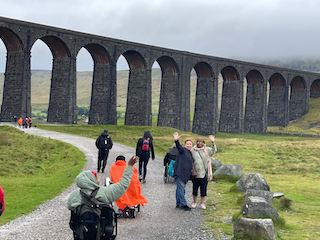
I have been volunteering with Sheffield Environmental Movement (SEM) for almost five years, and it has been a truly enriching journey. SEM has given me the opportunity to reconnect with nature and the great outdoors — something I had missed without even realising it.
Spending time in nature, breathing in fresh air, and appreciating open spaces has been not only beneficial for my physical health, but also a huge boost for my mental wellbeing. It brings a sense of calm, clarity, and positivity that’s hard to find elsewhere.
One of the most joyful parts of my experience has been meeting people from all walks of life — each with their own stories, needs, and perspectives. Working with such a diverse range of individuals has helped me become more understanding and compassionate. It’s amazing how much we can learn from simply listening to others.
Volunteering with SEM has also reconnected me with my childhood — a time when adventures didn’t require screens, gadgets, or the internet. Just the excitement of being outside, exploring, and feeling free. SEM has helped me rediscover that sense of wonder.
I’ve had the privilege of supporting many groups during residential weekends and outdoor activities. Whether it’s assisting with personal needs or simply making sure no one feels left out, I’ve found purpose and joy in being there for others. It’s about making everyone feel safe, included, and valued.
Why do I volunteer for SEM? Because it gives me a chance to grow, to be part of something meaningful, and to be surrounded by nature and good company. It allows me to share stories, listen deeply, and clear my mind through walking and reflection. Every experience has been heartfelt, and every moment has reminded me of the importance of community, compassion, and connection.
Millie – SEM Volunteer
Manage Cookie Consent
We use cookies to optimize our website and our service.
Functional
Always active
The technical storage or access is strictly necessary for the legitimate purpose of enabling the use of a specific service explicitly requested by the subscriber or user, or for the sole purpose of carrying out the transmission of a communication over an electronic communications network.
Preferences
The technical storage or access is necessary for the legitimate purpose of storing preferences that are not requested by the subscriber or user.
Statistics
The technical storage or access that is used exclusively for statistical purposes.The technical storage or access that is used exclusively for anonymous statistical purposes. Without a subpoena, voluntary compliance on the part of your Internet Service Provider, or additional records from a third party, information stored or retrieved for this purpose alone cannot usually be used to identify you.
Marketing
The technical storage or access is required to create user profiles to send advertising, or to track the user on a website or across several websites for similar marketing purposes.